What Keeps Bringing Them Back: The Quiet Magic of a Bakery That Became Something More

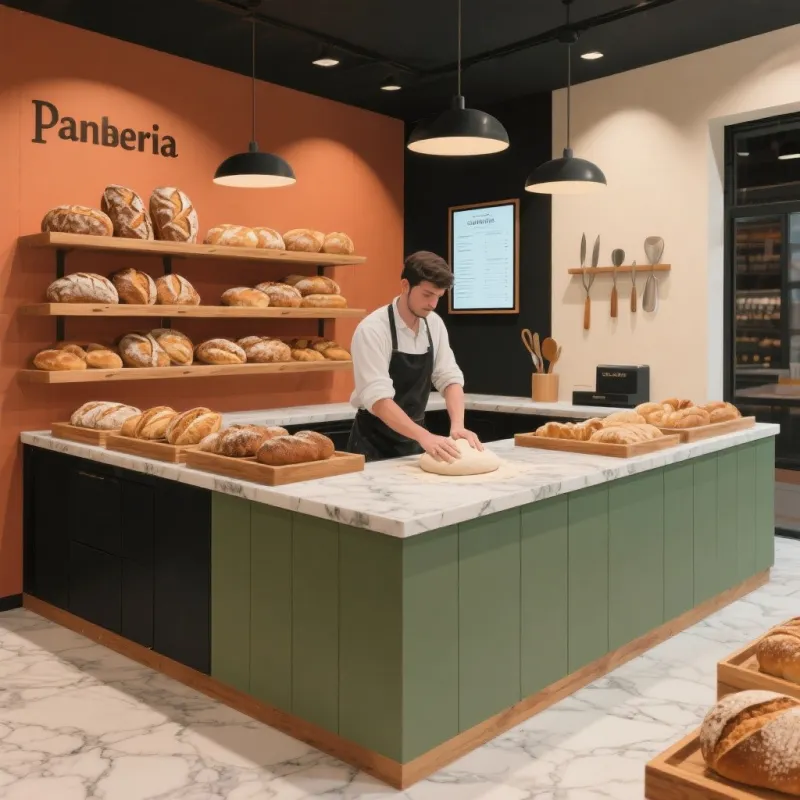
Photo: cozy neighborhood bakery morning customers community gathering Oakland, via sitbacklounge.com
It Started With a Seat by the Window
Marcos has been coming in every Tuesday and Thursday for about two years now. He orders the same thing — a large coffee and whatever pastry is closest to the register — and he sits at the same small table near the front window that looks out onto the street. He doesn't always talk to anyone. Sometimes he just reads. But ask him why he comes here instead of making coffee at home, and he'll pause like you've asked him something genuinely complicated.
"It's the people," he finally says. "Not anyone specific. Just... knowing they'll be here."
That answer, in various forms, is the one you hear over and over again when you start asking Merritt Bakery regulars why they return. It's rarely about the bread — even though the bread is exceptional. It's about something harder to name. A rhythm. A sense of place. The particular comfort of walking into a room where the smell is always the same and the faces are mostly familiar, even when you don't know anyone's last name.
The Psychology of the Third Place
Sociologists have a term for spaces like this: the third place. Home is your first place. Work is your second. The third place is somewhere in between — a neutral ground where social barriers lower and people from different walks of life end up in the same room without agenda. Classic examples include barbershops, diners, and neighborhood bars. Bakeries, it turns out, are a nearly perfect version of this.
The morning hours especially tend to flatten hierarchies. A software engineer from the Temescal neighborhood, a retired schoolteacher from Fruitvale, a freelance graphic designer who works weird hours — they're all just people waiting for coffee, half-awake, equally human. There's something disarming about that shared state of early-morning incompleteness.
Merritt Bakery didn't engineer this dynamic. It emerged from a combination of factors: the physical layout of the space, the unhurried pace of the staff, the fact that the bakery has only one location and has never tried to be anything other than exactly what it is. Consistency, it turns out, is its own kind of invitation.
First-Timers and the Initiation Effect
Ask anyone who works here and they'll tell you there's a recognizable pattern to first-time visitors. They come in a little uncertain, scanning the menu board with that slightly overwhelmed expression people get when they realize a place has real depth to it. They order carefully. They find a seat.
And then something shifts.
"You can almost see it happen," says one of the bakers who's been with the shop since early on. "They sit down, they take a bite of something, and their whole body just... settles. Like they exhaled without realizing they were holding their breath."
That first visit tends to create a low-grade loyalty almost immediately. People come back within the week. Then again. Then it becomes a routine they'd have trouble explaining to you if you asked them to justify it logically.
This isn't accidental — it's the result of a space that feels genuinely welcoming without being performatively so. There's no forced friendliness here, no scripted enthusiasm. The staff greets people like they're glad they came, because they are. The difference between those two things is enormous, and customers feel it even when they can't articulate why.
The Unspoken Rituals
Every community develops rituals, and Merritt Bakery's regulars have built up a whole quiet vocabulary of them over time.
There's the nod — the wordless acknowledgment between two people who've been coming in around the same time for months, who've never formally introduced themselves but recognize each other as part of the same ecosystem. There's the seat that isn't technically reserved but that everyone who comes in on weekend mornings knows belongs to the older woman who always brings her own crossword book. There's the unspoken agreement that if the last almond croissant is sitting there at 11am, you've earned it.
These rituals sound small because they are small. But small rituals are how humans signal belonging to each other. They're how strangers become, without any formal negotiation, something closer to neighbors.
Diana, who moved to Oakland from Chicago about three years ago and found the transition lonelier than she expected, says Merritt Bakery was one of the first places she started to feel like she actually lived here rather than just existing here.
"I didn't know anyone," she says. "I'd moved for work, I was working from home, and the city felt enormous and indifferent. I started coming here just to be around people. And slowly, I started recognizing faces. Then one day someone asked if I was working on something interesting, and we talked for forty-five minutes about nothing important, and I walked home feeling like myself again."
What the Bakers See
From behind the counter, the view is different. The bakers and staff have watched relationships form in real time — friendships that started as nothing more than shared table space, collaborations that grew out of overheard conversations, at least one couple who met while reaching for the same bag of bread on the same Saturday morning.
"We joke that we're basically running a social experiment," says one staff member. "But honestly, it doesn't feel like a joke. It feels like something real."
What the team has learned is that the physical space of a bakery does a lot of the social work on its own. The smells trigger comfort and openness. The act of eating together — even with strangers, even in parallel — creates a kind of low-level intimacy. The sounds of a working kitchen in the background provide a kind of ambient warmth that a coffee chain with recorded music simply cannot replicate.
There's also the matter of time. Merritt Bakery has been in the same spot long enough that it has accumulated history. The walls have absorbed years of conversations. The regulars carry the institutional memory of the place. New people walk into something that already has weight and texture, and they feel that without knowing exactly what they're feeling.
A Neighborhood's Anchor
Oakland has never been short on character, but it has been through a lot of upheaval — economic, political, cultural. Neighborhoods change fast here. Businesses open and close. Faces turn over. In that context, a place that simply stays, that keeps its doors open and its ovens running, becomes something more than a business. It becomes evidence that a neighborhood still has a center.
Merritt Bakery isn't trying to save Oakland. It's not trying to be a symbol or a statement. It's trying to make good bread and welcome people through the door and send them back into their day a little better than they arrived.
But in doing that, consistently, in one place, over years — it has become exactly the kind of anchor a city needs more of.
Marcos, still at his window table, folds his newspaper and finishes his coffee. He nods at someone across the room — a woman he's never spoken to, who nods back. He gathers his things, says goodbye to no one in particular, and heads out into the morning.
He'll be back Thursday.