Flour, Strangers, and Common Ground: How Oakland's Independent Bakeries Are Quietly Holding the City Together
Somewhere between the first crack of a sourdough crust and the last crumb of an almond croissant, something social happens. It's subtle — a nod over the pastry case, a comment about the line moving faster than expected, a question about what's in that particular loaf with the seeds on top. Small stuff. But in a city that's been through as much as Oakland has, small stuff adds up.
Merritt Bakery sits in a neighborhood that has watched Oakland change in real time. Long-timers and newcomers. Renters and owners. People who've been here for generations and people who showed up last year. The city contains multitudes, and not all of those multitudes have historically had easy ways to find each other. But the bakery line? That's a great equalizer.
The Psychology of the Third Place
Urban sociologists have a term for the spaces that aren't home and aren't work but where community actually lives: third places. Barbershops. Libraries. Corner stores. Diners. For a long stretch of American life, those spaces have been disappearing — hollowed out by online shopping, suburban sprawl, and the slow retreat of civic life behind screens.
Bakeries, it turns out, are filling some of that vacuum. And there are real psychological reasons why.
"There's something about the sensory experience of a bakery that lowers people's defenses," says Dr. Priya Mehta, a social psychologist who studies urban community formation and has visited Merritt more than a few times for research — and also just for the cardamom buns. "The smell of something baking is one of the most powerful emotional triggers we have. It's associated with warmth, safety, nurturing. When you walk into a space that smells like that, you're neurologically primed to feel comfortable around the other people in it."
That's not a small thing. Comfort, in the context of strangers, is increasingly rare.
What Keeps People Coming Back (And It's Not Just the Bread)
Ask Merritt regulars why they come back, and the food is always part of the answer — but rarely the whole answer.
Darnell, a high school teacher who's been stopping by on his way to work for going on three years, puts it plainly: "Honestly? I come for the coffee and the rye loaf. But I stay because I know people here now. I know the woman who always orders the same thing as me. I know the guy who brings his dog. That stuff matters when you're going into a hard day."
Marisol, a retired city planner who's lived in the neighborhood for over two decades, describes it differently. "When the bakery opened, I was skeptical. Another new spot, I thought. But they kept showing up. They kept being here. And then I started seeing my neighbors here, people I'd waved at for years but never really talked to. The bakery gave us an excuse to actually stop."
That word — excuse — is doing a lot of work. Americans, especially in cities, have gotten remarkably good at being near each other without actually connecting. Bakeries, with their inherently slow rhythms and their insistence on presence, interrupt that pattern.
The Counter as a Conversation Starter
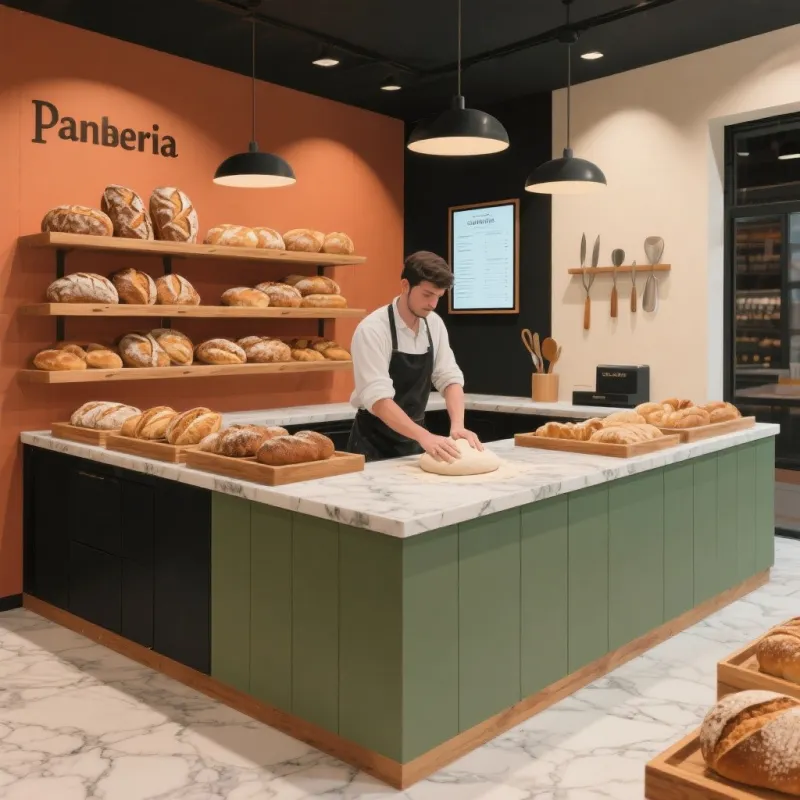
There's something specific about the way a bakery is laid out that encourages interaction. Unlike a grocery store, where you move through aisles in parallel without ever facing each other, a bakery funnels everyone to the same counter. You're standing together, looking at the same case, making the same small decisions. It creates a natural opening.
The staff at Merritt have noticed this for years. "People ask each other for recommendations all the time," says one of the bakers who's been with the bakery since the early days. "Someone will be debating between two things and a complete stranger will just weigh in. And then they're talking. It happens constantly."
That organic sociability is harder to manufacture than it looks. It requires the space to be small enough that strangers are actually proximate, the pace to be slow enough that there's time for exchange, and the atmosphere to be warm enough that people feel safe opening their mouths. Merritt, by design and by instinct, checks all three boxes.
A Gathering Spot in a Divided Moment
It would be dishonest not to name the context here. The United States is living through a period of profound social fracture. Political polarization, economic anxiety, and the long aftermath of a pandemic that rewired how people relate to public space — all of it has made genuine community harder to come by. Oakland, for all its resilience and culture, isn't immune to that.
Which makes the bakery's role feel more significant, not less.
"I think people are hungry for normal," says Darnell. "Not fake normal, not performative normal — just the actual experience of being in a room with people who are different from you and having it be fine. Having it be good, even. The bakery does that."
Marisol agrees, though she frames it through the lens of her years working in city planning. "What makes a neighborhood actually function isn't the parks or the transit, as important as those are. It's the places where people bump into each other and don't have a reason to be hostile. Bakeries are that. They always have been."
Why Independent Bakeries Specifically
It's worth asking whether a chain bakery — a Panera, a generic coffee-and-pastry franchise — could do the same work. The honest answer is: probably not, or at least not as well.
Independent bakeries carry something chains can't manufacture: a sense of genuine stake. The people behind the counter at Merritt live in Oakland. They shop at Oakland farmers markets for their ingredients. They care, in the way that's visible and not performative, about whether the neighborhood is okay. Customers feel that. It changes the texture of the interaction.
There's also the question of continuity. A neighborhood bakery that's been in the same spot for years becomes part of the neighborhood's memory. People have had first dates here, post-funeral gatherings here, first Saturday mornings with a new baby here. That accumulation of shared experience creates something a franchise simply can't replicate.
Just Show Up
None of this is complicated, which is maybe the whole point. Community doesn't require infrastructure or programming or a formal initiative. Sometimes it just requires a place that's reliably there, that smells like something good is happening, and that welcomes whoever walks through the door.
Merritt Bakery is, at its core, a bakery. It makes bread and pastries with care and intention and a deep connection to Oakland's particular rhythms. But it's also, without trying too hard to be, a place where the city shows up and reminds itself that it's still a city — still a collection of people with more in common than not, still capable of the small, daily acts of neighborliness that hold things together.
Come for the croissant. Stay for the conversation. That's the whole philosophy, really.