The Happy Accident Menu: Oakland Bakers Who Turned Their Worst Moments Into Their Best Sellers
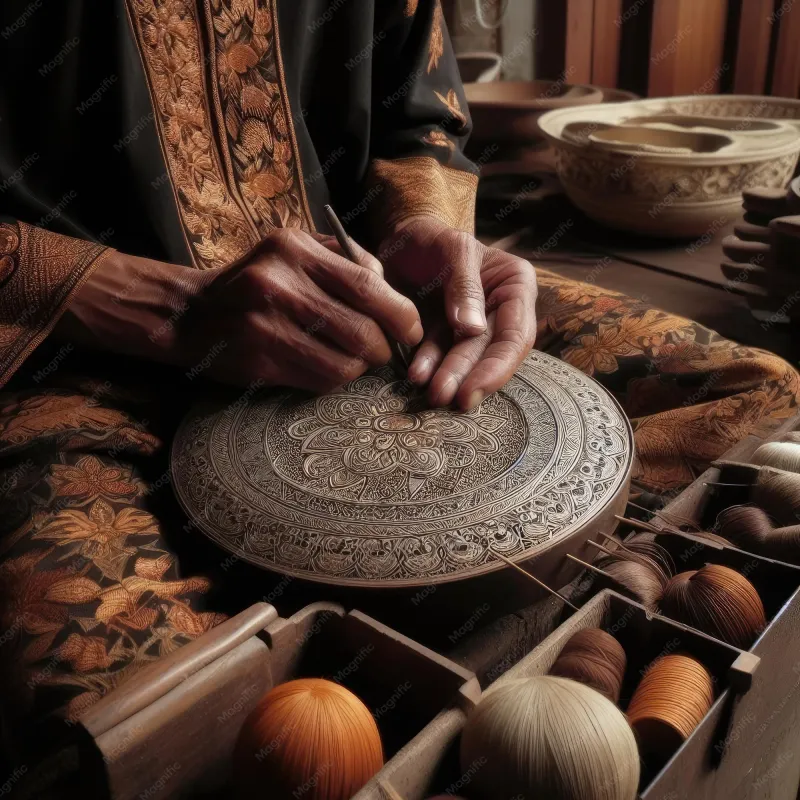
Photo: artisan baker pulling rustic bread from oven imperfect crust close up, via img.freepik.com
Baking is supposed to be precise. Weight your flour, control your temperature, watch your fermentation windows, don't walk away from the oven. The entire craft is built on the premise that consistency is the goal and deviation is the enemy.
Oakland bakers, predictably, have a different take on that.
Across the city, some of the most talked-about, most Instagrammed, most frantically pre-ordered items on local menus started as mistakes. Batches that went wrong. Experiments that didn't behave. Ferments that took an unexpected turn. And instead of quietly binning them and starting over, Oakland bakers did what Oakland bakers tend to do: they tasted it, thought about it, and asked whether "wrong" might actually mean "interesting."
The Philosophy of the Productive Mistake
There's a useful distinction between a mistake that ruins something and a mistake that transforms it. Bakers who have been working long enough start to develop a feel for which category they're dealing with. A loaf that didn't rise at all is probably a loss. A loaf that rose unevenly, fermented longer than intended, or developed an unexpected crust texture? That might be worth a second look.
"I think the best bakers I know all have this habit of tasting before they throw things away," said one Oakland pastry chef who works out of a shared production kitchen near Uptown. "Not everything is salvageable. But sometimes you bite into something that went sideways and you realize it went sideways somewhere really good."
This willingness to sit with imperfection — to resist the impulse to immediately correct or discard — is part of what gives Oakland's baking culture its particular character. The city has never been especially interested in performing perfection. It's more interested in authenticity, in things that feel real and specific, even if they're a little rough around the edges.
The Loaf That Wouldn't Quit
One of the more legendary accidental creations in Oakland bread circles started with a fermentation schedule that got completely derailed. A baker, dealing with a broken refrigerator and a packed production day, left a batch of dough in cold proof for nearly twice the intended time. By the time she got back to it, she expected to find a collapsed, over-fermented mess.
Instead, the dough had developed a flavor profile she'd never achieved intentionally — deeply sour, almost funky, with a complexity that her regular loaves didn't have. The crust that came out of the oven was different too. Thicker, more shattery, with a color that veered toward dark amber in ways that should have read as overbaked but somehow just read as right.
She sold it at the farmers market that weekend without much explanation. It sold out in an hour. People came back the following week asking for "that bread from last time."
"I had to figure out how to make a mistake on purpose," she laughed. "Which is actually a pretty weird problem to have."
She eventually reverse-engineered a method that reliably produced that same extended fermentation effect, and it became a permanent part of her weekly lineup. The loaf is now one of her most requested items, and she still describes it to customers as "the one that started with a broken fridge."
Pastry Accidents and the Art of the Pivot
Accidental genius isn't limited to the bread side of the bakery. Pastry kitchens, with their caramelized sugars, laminated doughs, and temperamental creams, offer plenty of opportunities for things to go beautifully wrong.
One Oakland baker tells the story of a caramel that burned — not scorched-bitter-ruined, but pushed past the usual amber into something deeper and more intense. She'd been distracted, the heat had climbed too high, and by the time she caught it, she was sure she'd have to start over. But she tasted it anyway.
"It tasted like the best thing I'd ever made by accident," she said. "Smoky, almost savory, with this bitterness that balanced the sweetness in a way I'd been trying to achieve intentionally for years."
That burnt caramel became the base for a tart filling that now has a dedicated following. Customers who try to describe it to friends struggle to explain what makes it different — it's the kind of flavor that resists easy categorization, which is, as it turns out, exactly the point.
What Imperfection Actually Reveals
There's something worth examining in the cultural conditions that make this kind of creative accident possible. Not every baking culture celebrates the happy mistake. In environments where consistency is the supreme value and deviation is treated as failure, bakers learn quickly to stay inside the lines. The mistake gets thrown out. The lesson, if there is one, stays private.
Oakland's baking scene has always had a different relationship with risk. Part of that comes from the city's broader creative culture, which has long valued experimentation and authenticity over polish. Part of it comes from the economic reality that many Oakland bakers operate as small, independent businesses without the safety net of a large brand — which paradoxically can make them more willing to take chances, because the whole operation is already a bet on something unconventional.
And part of it comes from the influence of fermentation itself. Sourdough, in particular, is a practice that teaches you to collaborate with unpredictability. Your starter is a living thing. It responds to temperature, humidity, the specific microorganisms in your environment. You can guide it, but you cannot fully control it. Bakers who work with wild fermentation long enough tend to develop a more flexible relationship with outcomes in general.
"Sourdough teaches you that not everything that goes wrong is actually wrong," said one baker who has been maintaining the same starter culture for over a decade. "Sometimes the thing you didn't plan for is the thing that was trying to happen."
Putting Accidents on the Menu
For customers, the happy accident items often carry a special kind of appeal. There's a story attached to them, and stories make food taste better — or at least more memorable. Knowing that the bread you're eating exists because a baker's refrigerator broke, or because a caramel got away from someone on a busy Saturday morning, adds a layer of human texture that no amount of careful recipe development can manufacture.
It also signals something about the values of the bakery itself. A place that puts its happy accidents on the menu is a place that's paying attention, that's tasting everything, that's not too proud to learn from what goes sideways. That's the kind of place worth seeking out.
So next time you're at a local Oakland bakery and you see something on the board described as a "special," or a "one-off," or — best of all — something the baker explains with a slightly sheepish grin and the phrase "it kind of just happened" — order it immediately. Those are the ones worth writing home about.