Dough in the Dark: The Oakland Bakers Turning Forgotten Warehouses Into the City's Best Bakeries
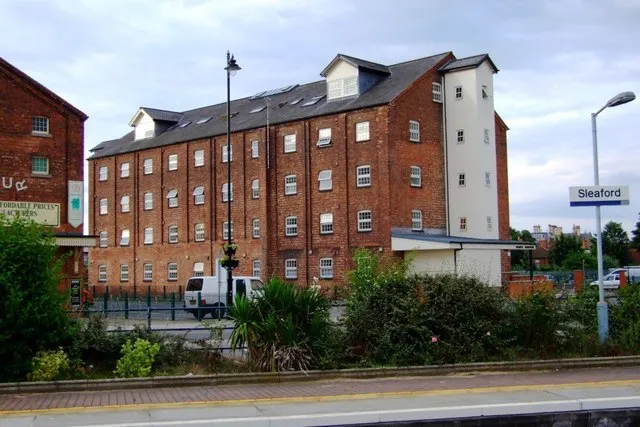
Photo: Donnylad, CC BY-SA 2.0, via Wikimedia Commons
The first thing you notice is the smell. Before you've even found parking, before you've spotted the hand-lettered sign or the small chalk sandwich board on the sidewalk, the smell finds you — warm, yeasty, faintly caramelized, unmistakably bread. Then you look up and realize you're standing in front of what appears to be, by every architectural indication, a former auto parts warehouse.
This is Oakland in 2024. And this is exactly where some of the most interesting baking in the Bay Area is happening.
Over the past several years, a distinct pattern has emerged across the city's flatlands and post-industrial corridors: small-batch bakers — many of them first-generation business owners, many of them trained not in culinary schools but in home kitchens and community bread circles — are taking over spaces that the traditional food industry overlooked. Warehouses. Old light-manufacturing buildings. Former cold-storage facilities. Spaces with loading docks instead of storefronts, concrete floors instead of subway tile, and ceilings high enough to fly a kite.
The results, both architecturally and gastronomically, are something to witness.
Why Warehouses? The Economics of Baking in Oakland
To understand the warehouse bakery trend, you have to understand the math of opening a food business in one of the most expensive metro areas in the country. Retail space on main commercial corridors — Piedmont Avenue, Temescal, Fruitvale — commands rents that can make the numbers impossible for a small operation just finding its footing. A 400-square-foot cafe space in a desirable neighborhood might run $4,000–$6,000 a month before you've bought a single bag of flour.
Industrial spaces in Oakland's flatlands, particularly in areas like the Fruitvale industrial zone, the stretch along International Boulevard, and pockets of West Oakland, can offer dramatically different economics. The square footage is larger, the per-foot cost is lower, and — crucially — the zoning often permits food production in ways that mixed-use retail space doesn't.
"The first place I looked at was a cute little spot on a nice street and I almost cried when I saw the lease terms," says one baker who now operates out of a converted warehouse space in the Fruitvale district. "Then someone told me to look at the industrial listings and suddenly the math started making sense."
There are tradeoffs, of course — and they're significant.
The Build-Out: Where the Real Work Begins
A warehouse is not a bakery. Turning one into the other is a project that tests every resource a small business owner has: financial, physical, emotional, and creative.
Commercial kitchens require specific ventilation systems, grease traps, three-compartment sinks, and health department-approved surfaces. A building that spent its previous life storing machine parts or automotive supplies may have none of these things. Electrical systems often need upgrading to handle the amperage demands of commercial deck ovens. In older Oakland industrial buildings, you might also be dealing with asbestos abatement, lead paint remediation, or seismic retrofitting requirements.
"We spent almost eight months in build-out before we baked a single loaf for a customer," recalls one baker who converted a former textile storage space in West Oakland. "There were weeks where I genuinely didn't know if we were going to make it. The permits alone almost broke us."
And yet, the bakers who've come through that process describe something on the other side that feels worth it — a space that is entirely theirs, shaped by their vision, unrestricted by the design legacy of whoever ran a café there before.
Design by Necessity, Beauty by Accident
Something unexpected tends to happen when bakers take over industrial spaces: the aesthetic becomes genuinely compelling in ways that no interior designer could quite replicate. Original concrete floors, left unpolished because refinishing costs money, develop a patina that feels lived-in and honest. Exposed brick — the same brick that insulated machine shops for decades — turns out to be excellent at regulating temperature, which matters enormously in a baking environment. High ceilings that were designed for forklifts create a sense of open, airy space that feels almost cathedral-like when flooded with morning light.
"I didn't set out to make it look cool," laughs one baker whose space has become something of a destination for food writers and Instagram accounts. "I just couldn't afford to cover anything up. And then people started telling me it was beautiful and I thought, okay, I'll take it."
This accidental beauty has a deeper resonance in Oakland's context. The city has a long, complicated history with its industrial spaces — from the port that built the city's working-class identity to the warehouses that became artist live-work spaces in the 1980s and 90s, to the devastating Ghost Ship fire in 2016 that forced a painful reckoning with how those spaces were being used and regulated. The warehouse bakeries operating today exist in that history. They know it. Many of their owners grew up in it.
Community, Not Just Commerce
What separates Oakland's warehouse bakery scene from simply being a real estate story is what these spaces are becoming for their neighborhoods. Because many of them are located in parts of the city that have historically lacked the kind of quality food infrastructure that wealthier neighborhoods take for granted, their presence means something beyond croissants and country loaves.
Several of these operations have built community programming directly into their model. Weekend pop-ups that double as neighborhood gathering points. Bread subscriptions that prioritize local residents. Sliding-scale pricing on day-old goods. Partnerships with nearby schools and community organizations. A few have even begun offering informal baking classes, creating pathways for the next generation of Oakland bakers to learn their craft without the barriers of formal culinary education.
"We're not just trying to sell bread," says one baker who runs a small operation out of a converted cold-storage building near the San Leandro border. "We're trying to be a place where people feel like they belong. That's actually harder than the baking, some days."
What It Means for Oakland's Food Identity
Oakland has always had a food culture that punches above its weight — a city that produces James Beard nominees and beloved neighborhood institutions in equal measure, a place where the culinary conversation has always been inseparable from questions of justice, access, and community ownership. The warehouse bakery movement fits neatly into that tradition.
These aren't outposts of a national chain or the vanity projects of outside investors looking for a tax write-off. They are, almost without exception, the life's work of people who love this city, who are betting on this city, who are willing to haul a 600-pound deck oven up a loading dock ramp because they believe Oakland deserves great bread.
At Merritt Bakery, we see these bakers as neighbors and collaborators — part of the same ecosystem, the same ongoing project of building a food culture that's as generous and original as Oakland itself. The next time you smell bread where you least expect it, follow your nose. You might end up somewhere wonderful.
The door might be a loading dock. Walk right in.