Know Your Farmer, Know Your Flour: Oakland Bakers Are Rewriting the Grain Supply Chain
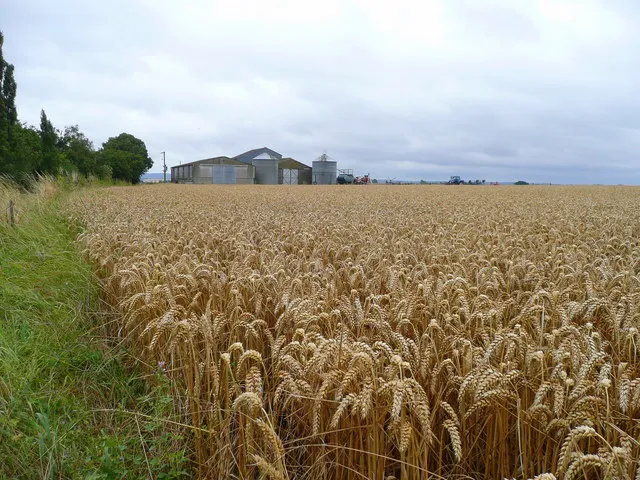
Photo: Jonathan Billinger, CC BY-SA 2.0, via Wikimedia Commons
When you bite into a really exceptional loaf of bread — the kind that stops you mid-chew and makes you look down at it like it has something to say — there's usually a story behind that experience. It might be the baker's technique, the fermentation schedule, the shaping. But increasingly, in Oakland and across the Bay Area, the story starts much earlier than the bakery. It starts in a field.
A growing number of Oakland's artisan bakers are doing something that would have seemed unnecessarily complicated — even eccentric — a decade ago. They're driving out to small farms in the Sacramento Valley, the Capay Hills, and the coastal ranges of Sonoma and Mendocino counties. They're meeting farmers, walking fields, talking about soil health and rainfall and heritage wheat genetics. And then they're milling or sourcing flour from those specific farms and bringing it back to Oakland to bake with.
The result is something the specialty coffee world has understood for years but the bread world is only beginning to fully embrace: terroir in a loaf. The idea that where grain is grown, how it's farmed, and when it's harvested can produce flavors and textures that no commodity flour ever could.
The Problem With the Bag on the Shelf
To understand why this matters, it helps to understand what most flour actually is.
The majority of flour sold in the United States — including plenty of the "artisan" and "bread" flours marketed to serious home bakers and small commercial operations — comes from enormous commodity wheat blends. These blends are engineered for consistency above all else. A 50-pound bag of bread flour from a major national supplier is designed to perform the same way in January as it does in August, in Oakland as it does in Atlanta. That's genuinely useful for industrial baking. But it means the flour has been stripped of almost everything that would make it distinct.
Protein content is standardized. Volatile aromatic compounds — the ones that give freshly milled grain its nutty, grassy, almost sweet complexity — dissipate quickly after milling and are long gone by the time commodity flour reaches a bakery. The wheat itself might be sourced from dozens of different farms across multiple states, blended and processed until any trace of origin has been erased.
For a baker who cares deeply about flavor, that's a frustrating starting point.
The Coffee Parallel
The comparison to specialty coffee isn't just a cute analogy — it's a genuinely useful framework for understanding what's happening in the grain world right now.
Thirty years ago, most American coffee came in a can and tasted like roughly the same thing regardless of where the beans originated. Then a generation of roasters started asking questions about farm origin, processing methods, and harvest timing. They built direct relationships with farmers. They paid more, demanded traceability, and educated their customers about why a washed Ethiopian natural and a Guatemalan honey-process could taste completely different even when brewed the same way.
The result transformed an industry and created an entirely new consumer vocabulary around coffee quality.
Bakers who are working directly with grain farmers are betting that the same transformation is possible — and maybe overdue — in bread. The vocabulary is different (extraction yield becomes hydration ratio; roast profile becomes fermentation curve), but the underlying logic is identical: when you know exactly where your ingredient came from and how it was produced, you can make something with it that a commodity product simply cannot replicate.
The Relationships Behind the Flour
What makes this movement genuinely compelling is that it's built on human relationships, not just sourcing logistics.
Bakers who have gone deep into direct-grain sourcing describe a learning curve that goes well beyond adjusting hydration percentages. Working with freshly milled, single-origin flour means working with something alive and variable in ways that commodity flour isn't. Protein levels shift with the season. A wet spring in the Sacramento Valley produces grain with different gluten characteristics than a dry one. A heritage wheat variety like Red Fife or Sonora White behaves nothing like the high-protein modern wheats that most baking formulas are built around.
That variability demands a kind of attentiveness and adaptability that many bakers describe as deeply satisfying — even when it's maddening. You can't just follow the recipe. You have to read the dough, adjust on the fly, and develop an intuitive understanding of how this specific flour from this specific farm in this specific season wants to behave.
Farmers, for their part, are often energized by these partnerships in ways that purely transactional relationships with distributors never provide. When a baker can tell a wheat farmer that their grain produced a loaf with a specific flavor note — something toasty, something almost floral, something that customers keep asking about — it creates a feedback loop that makes the farming itself more meaningful. Growing grain for a commodity market offers no such connection.
The Economics Are Honest (and Complicated)
None of this is cheap, and it would be dishonest to pretend otherwise.
Direct-sourced, freshly milled flour from small Northern California farms costs significantly more than commodity alternatives. Bakers who go this route typically pass some of that cost on to customers through higher bread prices, and that raises real questions about accessibility that the Oakland food community takes seriously. A $14 sourdough loaf is not accessible to everyone in a city where economic inequality remains one of the defining tensions of daily life.
The bakers navigating this honestly tend to acknowledge the tension without pretending it doesn't exist. Some work to offset costs through volume efficiencies, community-supported bread programs, or sliding-scale pricing for longtime neighborhood customers. Others argue that paying fair prices for grain grown by small, sustainable farms is itself a progressive act — that the cheap flour in a $4 supermarket loaf has costs that are just paid by someone else, usually the farmer and the land.
It's a complicated conversation, and it's one worth having out loud rather than behind the scenes.
What It Tastes Like
At the end of the day, the most persuasive argument for direct-trade grain isn't political or ethical — it's sensory.
Bread made from freshly milled, single-origin flour tastes different. Fuller. More complex. There's a depth to the crust and a richness to the crumb that commercial flour struggles to produce no matter how skilled the baker. The flavors change with the seasons in ways that can feel almost startling the first time you notice them — a loaf baked in November from fall-harvested grain tasting noticeably different from the same baker's summer bread.
That variability, that connection to season and place and specific human relationships, is exactly what Oakland's best bakers are chasing. It's what makes a loaf of bread feel like it comes from somewhere — from this city, from this region, from this moment in time.
At Merritt Bakery Oakland, that sense of rootedness is everything. We bake with love and we bake with intention, and increasingly, that means knowing exactly whose hands planted the grain that went into your loaf. We'll keep introducing you to the farmers, the fields, and the flours that make that possible.