Why Your Morning Croissant Is Actually Holding This Neighborhood Together

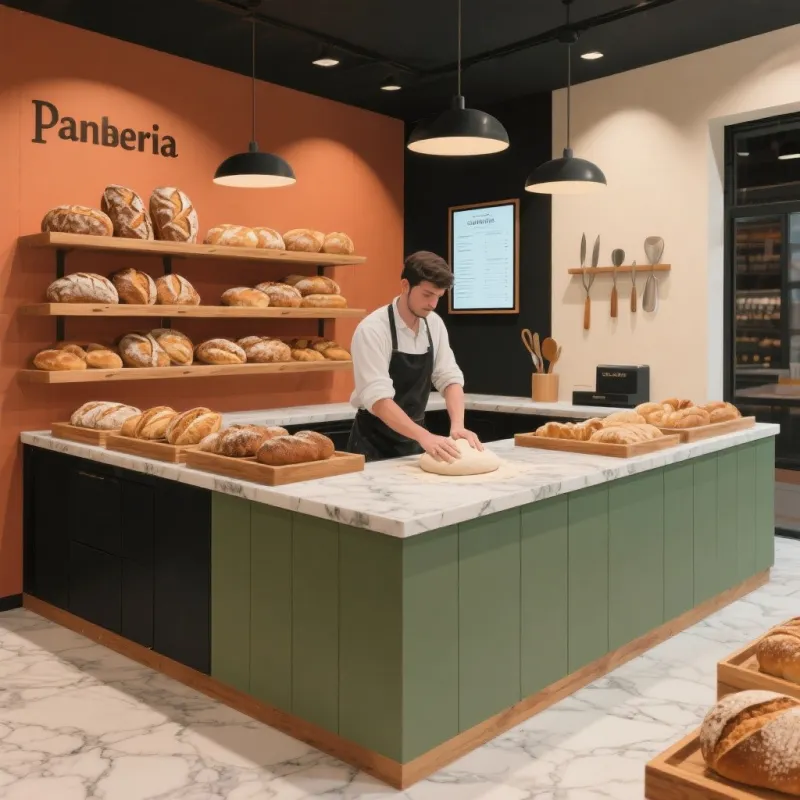
Photo: cozy neighborhood bakery morning customers community gathering Oakland, via sitbacklounge.com
Somewhere between the first pull of espresso and the last flaky crumble of a butter croissant, something sociologically significant is happening at Merritt Bakery. Most people don't notice it. They're too busy catching up with the person they ran into, or half-reading the newspaper, or just sitting quietly with their coffee while the morning arranges itself around them. That's exactly the point.
Ray Oldenburg, the urban sociologist who coined the term "third place" back in the 1980s, described these spaces as the anchors of community life—informal gathering spots distinct from home (the first place) and work (the second place). He was talking about barbershops, taverns, coffeehouses. He could have been talking about this corner of Oakland.
The Science of Showing Up
Psychologists who study habit formation will tell you that rituals aren't just about comfort—they're about identity. When you go to the same bakery every Wednesday morning and order the same almond danish, you're not just getting breakfast. You're telling yourself a story about who you are and where you belong.
Margarita V. has been coming to Merritt Bakery for eleven years. She moved to the neighborhood in her late twenties, knew nobody, and found herself gravitating here almost by accident. "The first time I came in, I honestly just needed somewhere to sit that wasn't my apartment," she says. "But then I kept coming back. And at some point I realized I knew people here. Not their last names, not their jobs necessarily. Just—them."
That kind of low-stakes familiarity is harder to engineer than it sounds. It requires consistency—the same faces behind the counter, the same reliable menu anchors, the same hours you can set your internal clock by. It requires a space that doesn't rush you out the door. And it requires, perhaps most importantly, a business that has consciously decided not to grow beyond what the neighborhood can actually hold.
What Staying Small Actually Costs—And What It Buys
There's a version of this story where Merritt Bakery opens a second location, then a third, then gets acquired by a regional chain and becomes a brand. That story happens all the time. It's not this story.
Keeping one location isn't just a lifestyle choice—it's an economic one with real tradeoffs. A single storefront means a ceiling on revenue. It means turning down catering contracts that would require scaling production. It means some Saturday mornings when the line goes out the door and you physically cannot serve everyone fast enough.
But it also means something rarer: the staff knows your name. Not because they were trained to ask for it at the register, but because you've been coming in long enough that it just happened. Longtime baker and morning crew lead Dani T. puts it plainly: "When you work one room for years, you start to understand the rhythms of the people in it. I know who's having a hard week before they say a word. You can't replicate that at scale."
For the neighborhood, that intimacy translates into something economists call "loyalty surplus"—the gap between what a customer would pay somewhere else and what they actually pay here, driven entirely by relationship. People come back not just because the bread is good (though it is) but because they feel seen.
The Unexpected Infrastructure
Here's what nobody tells you about neighborhood institutions: they quietly become load-bearing walls in the social architecture of a place.
Look at what actually happens at Merritt Bakery on any given weekday morning. A retired teacher grades her former students' college essays at a corner table. Two contractors who met here six years ago now run a business together. A new parent, sleep-deprived and slightly unmoored, discovers that the staff will always have a kind word and that the regulars will always make space. A teenager doing homework learns, without anyone explicitly teaching her, how adults in a community actually interact with each other.
None of this is programmed. None of it is a marketing strategy. It emerges organically from the simple fact of a consistent, welcoming space that has been in the same place long enough for patterns to develop.
Urban planner and Oakland native Jerome C. has studied neighborhood commercial corridors for over a decade. He points to bakeries and coffee shops specifically as underappreciated civic infrastructure. "We spend a lot of time talking about parks and libraries as community spaces," he says. "But the truth is, for a lot of people, the bakery on their block is where they actually encounter their neighbors. It's where the neighborhood happens in real time."
What Gets Lost When These Places Go
Ask anyone who's watched a neighborhood institution close—a diner that's been there forty years, a barbershop that anchored a block for decades—and they'll tell you the loss feels disproportionate to what it was on paper. It's not just that you lost somewhere to eat. It's that a specific kind of social gravity disappeared, and the people who orbited it scattered.
Oakland has felt that loss more than once. The city's commercial landscape has been reshaped repeatedly by rising rents, economic pressure, and the churn of development. Every time a neighborhood loses an institution, it loses a little of the connective tissue that held it together.
Which is part of why places like Merritt Bakery matter in ways that go beyond the quality of their laminated dough or the sourness of their starter. They are, in the most literal sense, irreplaceable—not because no one else could bake good bread, but because the specific web of relationships, rituals, and recognition that builds up around a single location over years cannot be replicated. It has to grow. And it takes time.
The Croissant as Civic Act
This might sound like a lot of weight to put on a pastry. Fair enough. Nobody walks into a bakery thinking about urban sociology or community infrastructure. They walk in because they're hungry, or cold, or tired, or just happy it's morning.
But the cumulative effect of all those ordinary mornings—that's where something real gets built. The regulars who've watched each other's kids grow up. The staff who've become fixtures in people's weeks. The specific quality of light through the front window at 8 a.m. that you'd recognize anywhere.
Merritt Bakery didn't set out to become the third place Oakland needed. It just stayed. It kept the same hours, kept the same commitment to the neighborhood, kept showing up. And the neighborhood, in return, kept showing up back.
Some mornings, that's all community really is—a bunch of people who chose the same corner, again and again, until it started to feel like home.