Once You've Had the Real Thing, There's No Going Back: How Merritt Bakery Quietly Rewired Oakland's Bread Standards
Photo: August Geyler, CC BY-SA 4.0, via Wikimedia Commons
There's a specific kind of disappointment that hits you at a grocery store checkout line. You've got a plastic-wrapped loaf in your cart — the kind with a shelf life that defies the laws of natural food science — and somewhere in the back of your brain, a memory fires: the crackle of a crust, the open crumb, the faint tang of a long fermentation. You put the loaf back. Maybe you drive across town instead.
If you live in Oakland, there's a decent chance Merritt Bakery is responsible for that moment.
The Standard Nobody Asked For (Until They Tasted It)
Merritt Bakery didn't set out to make anyone's grocery run feel inadequate. The mission was simpler and more personal than that — bake the best bread possible, source ingredients that actually mean something, and let the fermentation process do what it's been doing for thousands of years. No shortcuts, no stabilizers, no cutting corners on the timeline because a faster proof would be more convenient.
But here's the thing about uncompromising standards: they're contagious. When a neighborhood bakery commits that hard to craft, it doesn't just make better bread. It makes better customers — people who start reading labels, asking questions, noticing the difference between a loaf that was rushed and one that was given time to become itself.
Oakland has always been a food-forward city, full of people who care about where things come from and how they're made. Merritt Bakery didn't create that culture, but it's been feeding it — literally — for years.
What Uncompromising Sourcing Actually Looks Like
The ingredient sourcing at Merritt Bakery isn't a marketing talking point. It's a decision that gets made over and over again, often at real cost. Choosing heritage grain varieties from California farmers over commodity flour means accepting more variability in the dough. It means learning the specific protein content and hydration behavior of each harvest. It means your bakers have to be more skilled, more attentive, more willing to adjust on the fly.
That level of intention translates directly into flavor — the nutty depth of a whole wheat loaf milled from locally grown grain, the complexity of a sourdough that's been cold-proofed overnight and baked in a steam-injected oven. These aren't small differences. They're the kind of differences that, once noticed, become impossible to un-notice.
Regular Merritt customers talk about this shift in almost the same language. "I used to think bread was just bread." "I didn't know flour could taste like something." "I can't explain it, I just know when it's right now." That's not brand loyalty talking — that's a changed palate.
The Fermentation Factor
If there's one thing that separates truly great bread from everything else, it's time. Specifically, the time given to fermentation — the slow, living process by which wild yeast and bacteria transform a simple mixture of flour and water into something with genuine nutritional depth and flavor complexity.
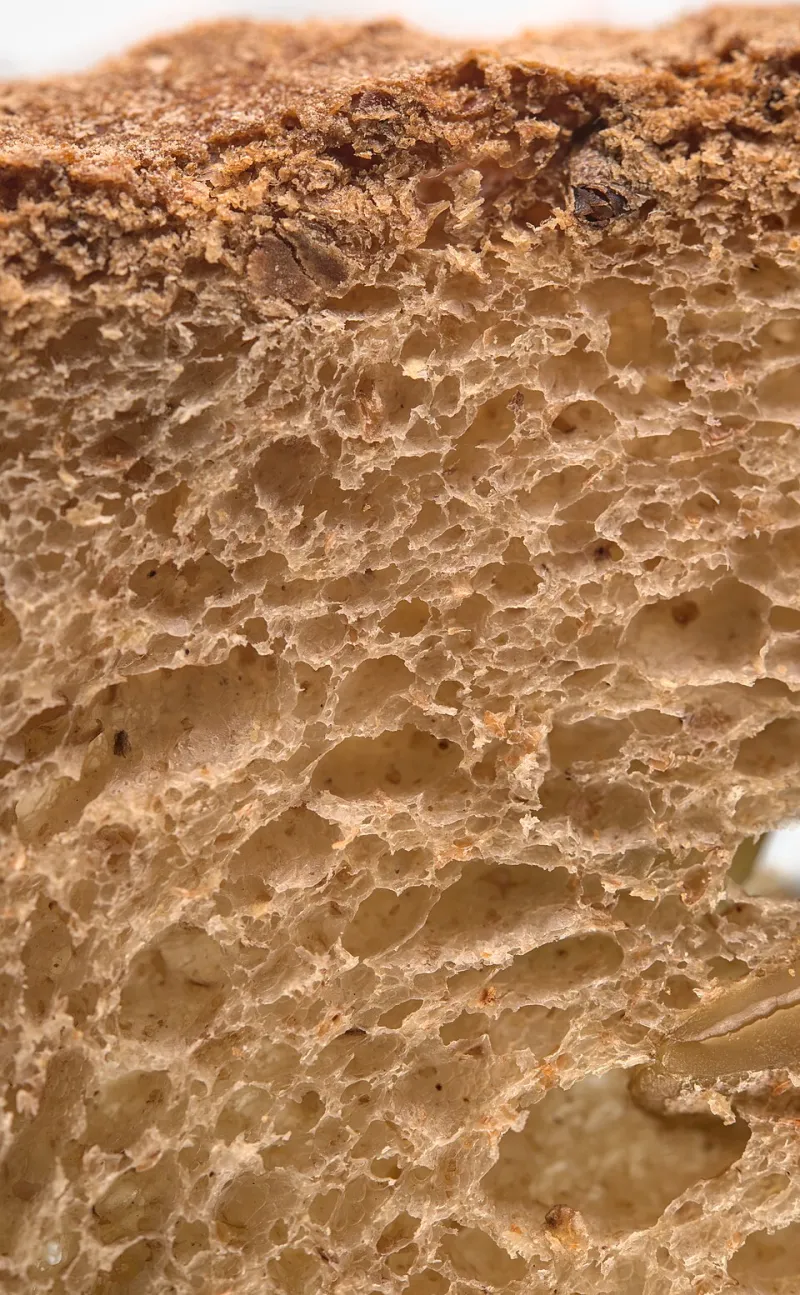
Merritt Bakery's commitment to long fermentation schedules is the kind of thing that's easy to undervalue until you understand what's actually happening in the dough. Extended fermentation breaks down phytic acid, making minerals more bioavailable. It develops organic acids that contribute to flavor and help the bread stay fresh longer — naturally, without additives. It creates a crumb structure that's light and open rather than dense and gummy.
None of that happens fast. And in a food system that rewards speed and scale, choosing slow fermentation is genuinely countercultural. It's also the reason that a slice of Merritt sourdough, eaten plain with maybe a little butter, is a complete sensory experience rather than just a vehicle for sandwich fillings.
Once your palate has calibrated to that standard, a two-hour commercial yeast loaf tastes like a rough draft.
When the Whole Neighborhood's Expectations Shift
The downstream effects of Merritt Bakery's approach show up in subtle but real ways across Oakland's food scene. Farmers market vendors report more customers asking specifically about grain varieties. Local restaurants that once ordered generic bread from restaurant supply companies have started sourcing from independent bakeries — or, in some cases, bringing baking in-house because their diners have started to notice and care.
Coffee shops that stock pastries have started fielding questions about ingredients. Pop-up bakers who might have been content with a simpler product find that Oakland crowds push back, gently but clearly, when something doesn't meet the bar they've come to expect.
Is Merritt Bakery solely responsible for all of this? Of course not. Oakland has a whole ecosystem of talented bakers and food producers, and the city's progressive food culture predates any single shop. But there's something to be said for a neighborhood anchor — a place that's been consistently excellent long enough that its standards become the reference point. When people say "it's good, but it's not Merritt good," that's not just a compliment. That's a benchmark being applied across the entire category.
The Return Trip Problem
Ask anyone who's become a regular at Merritt Bakery what happens when they're traveling or stuck somewhere without access to quality bread. The answers are almost universally the same: they eat the grocery store loaf because they have to, and they feel the absence of quality in a way they never would have before.
This is sometimes called the "return trip problem" in food writing — the idea that exposure to exceptional quality makes mediocrity harder to tolerate. It sounds like a first-world inconvenience, and maybe it is. But it also points to something meaningful about how taste education works. You can't un-know what good bread tastes like. The experience becomes a new baseline, and everything else gets measured against it.
That's a powerful thing for a neighborhood bakery to have done. Not through advertising or aggressive expansion, but simply by showing up every day and refusing to make anything less than the best loaf they know how to make.
Craft as a Kind of Civic Argument
There's a progressive case to be made for this kind of uncompromising craft, and it goes beyond personal taste. When a bakery insists on sourcing from local farmers, it keeps money cycling through regional agricultural systems. When it pays bakers fairly and invests in their skills, it contributes to a local economy that's more resilient and more equitable. When it refuses to cut corners on fermentation time, it's implicitly arguing that food is worth taking seriously — that the people eating it deserve something made with real care.
Merritt Bakery's influence on Oakland's bread expectations isn't just about flavor, though the flavor is genuinely exceptional. It's about what a neighborhood learns to value when it has access to something made with full integrity. It's about the slow, cumulative effect of a bakery that treats every loaf like it matters.
Because it does. And Oakland, loaf by loaf, is starting to act like it knows that.