When One Bakery Raises the Bar, the Whole Neighborhood Has to Reach Higher
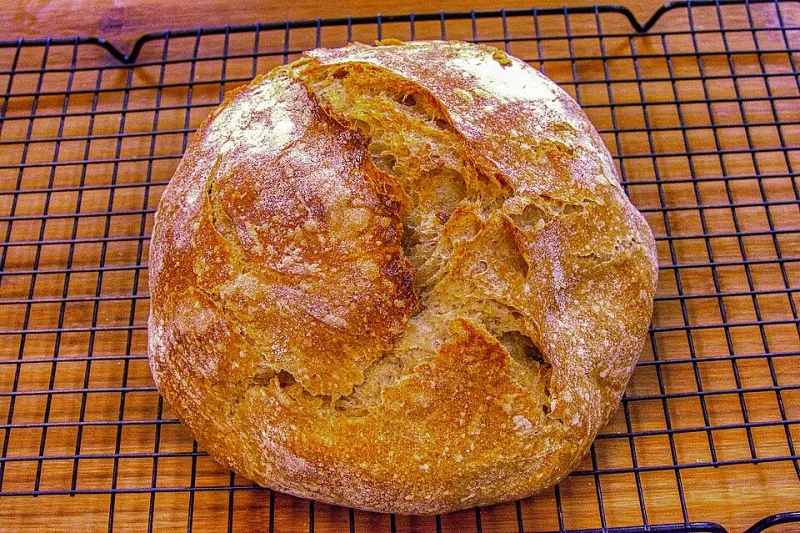
Photo: Photograph by Mike Peel (www.mikepeel.net)., CC BY-SA 4.0, via Wikimedia Commons
There's a moment that regulars at Merritt Bakery know well. You're standing at the counter, watching a loaf come out of the oven — that deep mahogany crust, that particular crackle when it hits the cooling rack — and something inside you recalibrates. Whatever bread you bought at the grocery store last week suddenly feels like a different product entirely. Not just worse. Different in kind.
That recalibration, multiplied across thousands of Oakland customers over years of Saturday morning visits and weekday coffee runs, is what we're talking about when we say Merritt Bakery has changed the neighborhood. Not through expansion. Not through a viral moment or a celebrity endorsement. Through the slow, steady accumulation of loaves that were exactly what they were supposed to be.
The Standard Nobody Asked For (But Everyone Needed)
When a bakery commits to long fermentation times, locally sourced grain, and the kind of hands-on process that can't be automated, it's making a statement whether it intends to or not. It's saying: this is what bread can be. And once enough people taste that, the statement becomes a question they start asking everywhere else.
Oakland has always had strong opinions about food. This is a city that takes its produce seriously, that has built genuine food culture out of neighborhoods that were systematically underinvested in for decades. But bread? For a long time, bread was the thing you picked up without thinking much about it. A means to an end. A vehicle for other flavors.
Merritt Bakery quietly refused to accept that framing. A well-made loaf isn't a vehicle. It's a destination.
And slowly, without any grand announcement, Oakland started to agree.
What Changes When You Know Better
Talk to home bakers in the Temescal, Rockridge, or Grand Lake neighborhoods and you'll hear a version of the same story. Someone tasted something exceptional. They started asking questions. They bought a bag of good flour. They looked up what a proofing basket actually does. They killed their first starter and didn't give up.
That chain of curiosity traces back, more often than people realize, to a single moment of tasting something made with genuine care. Merritt Bakery has been generating those moments consistently, and the downstream effect is a neighborhood with more people who understand what fermentation actually means, who can identify the difference between a crumb that developed slowly and one that was rushed.
This is a form of food education that doesn't happen in a classroom. It happens at a counter, with a sample slice and a cup of coffee.
The Pressure on Everyone Else
Here's the part that doesn't get talked about enough: when one shop in a neighborhood consistently delivers at a high level, it creates pressure — not hostile, not explicit, but real — on every other food business in the area to examine their own standards.
This isn't about competition in the traditional sense. It's about what customers come to expect as normal. When your regulars have been eating properly fermented sourdough twice a week, they notice when something is passing for sourdough without actually earning the name. They notice the difference between a croissant with real lamination and one that's just vaguely flaky. They've developed a palate, and they didn't take a class to do it.
That educated customer base is, in its own way, a form of collective advocacy for quality. It supports businesses that take the work seriously and quietly stops supporting ones that don't.
Quiet Activism in a Commercialized Food Landscape
There's a broader context worth naming here. The industrialization of bread — the consolidation of grain production, the introduction of additives that extend shelf life at the expense of flavor and nutrition, the race to make something that looks like bread while functioning mostly as a commodity — didn't happen in secret. It happened because consumers, over time, accepted lower standards in exchange for lower prices and greater convenience.
A bakery like Merritt isn't just making good bread. It's making an argument about what bread should be. Every loaf that comes out of that kitchen is a small, edible rebuttal to the idea that convenience should always win.
That's a progressive position, even if it doesn't announce itself as one. It says: the way things are isn't the way things have to be. It says: people deserve better than what the market has decided to give them by default. And it says those things not through a manifesto but through a consistent, daily practice of doing the work right.
The Ripple Nobody Planned
Merritt Bakery didn't set out to transform Oakland's relationship with bread. It set out to make bread worth eating. But those two things, it turns out, are connected in ways that compound over time.
The home baker who started experimenting because of a single transcendent slice. The café owner who switched suppliers because their customers started asking harder questions. The kid who grew up watching their parent buy real bread and now, as an adult, can't imagine settling for anything less. These are the ripples.
They're harder to measure than revenue or social media reach. But they're more durable than either.
What It Means to Stay
Some of the most powerful thing a business can do in a neighborhood is simply remain. Show up every day. Maintain the standard. Don't drift toward shortcuts when times get hard or when scaling up starts to look tempting.
Merritt Bakery's presence in Oakland — consistent, rooted, unspectacular in the best possible sense — is itself a kind of civic act. It anchors a block. It gives people a reason to walk instead of drive, to slow down instead of grab-and-go, to have a brief human interaction before the day starts pulling them in every direction.
The bread is the point. But the bakery is also the point.
And when both of those things are done well, for long enough, in a place that people actually live their lives — something changes. Not loudly. Not all at once. But genuinely, and in ways that outlast any single loaf.
That's the Merritt effect. And Oakland is better for it.