Same Time Tomorrow: How Oakland's Bakery Regulars Accidentally Built a Neighborhood
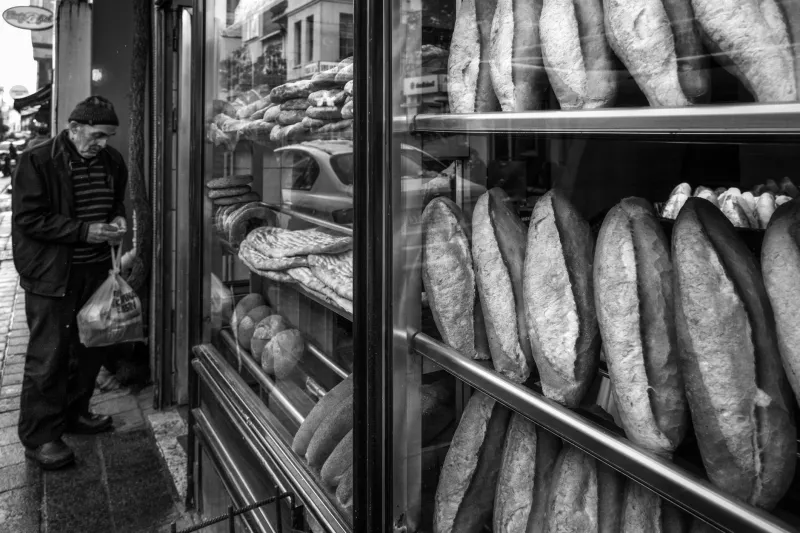
There's no formal meeting time. No one sends a reminder. But every weekday morning, right around 7:45, a loose cluster of familiar faces materializes outside a particular bakery on the east side of Oakland — retirees with canvas tote bags, parents still in pajama pants, a guy in scrubs who just finished a night shift at Highland Hospital. They nod. They swap complaints about the parking on MacArthur. Someone's dog gets its ears scratched by a stranger who's been scratching those same ears for two years and still doesn't know the owner's last name.
This is not a club. Nobody organized it. It just — happened.
The Invisible Calendar That Runs the Morning
Urban planners have a term for the kind of space that encourages casual, unscripted interaction: a third place. Not home, not work, but somewhere in between — a diner, a barbershop, a park bench. Sociologist Ray Oldenburg coined the phrase back in the '80s, and it's been invoked endlessly since. But what doesn't get talked about enough is the time element. It's not just where people gather. It's when they can count on each other being there.
Bakeries, it turns out, run on one of the most reliable schedules in the urban landscape. The loaves are proofed overnight. The ovens fire up before dawn. The doors open at a consistent hour, six or seven days a week, without the variability of a bar's mood or a restaurant's reservation system. That predictability — boring to some, deeply comforting to others — is exactly what makes a bakery the kind of place where community can quietly take root.
"I don't even think of it as going to buy bread anymore," says Denise, a retired OUSD teacher who has been picking up a seeded rye loaf every Tuesday and Friday for going on four years. "I think of it as checking in. With the bakers, with the regulars. It's my pulse check on the neighborhood."
The Bakers Know More Than Your Order
Ask any baker who's worked a counter long enough and they'll tell you: the regulars become a kind of extended family whether you plan for it or not. You start to notice when someone's missing. You learn that the woman who always orders two croissants is actually only eating one — the second one goes to her neighbor, an elderly man who doesn't get out much. You pick up on the quiet signals that someone is having a hard week.
At Merritt Bakery Oakland, we've felt this firsthand. The morning rush isn't just a transaction — it's a temperature check on the block. When a familiar face stops coming in, someone usually mentions it. Sometimes we find out they moved. Sometimes we find out they got sick. And on the mornings when someone walks in looking lighter than usual, a fresh loaf and a two-minute conversation can do more than we'd ever take credit for.
"There's a version of customer service that's about efficiency," says one of our bakers, who's been shaping loaves here since we opened. "And then there's a version that's about actually seeing people. We try to do the second one."
Routes as Ritual
For some regulars, the bakery isn't just a destination — it's a waypoint in a larger morning geography. Oakland's neighborhoods are dense with these informal circuits: coffee first, then the bakery, then maybe a stop at the farmers market on Saturdays. People time their dog walks to swing past the window. Cyclists build their morning routes around it. A couple in Temescal told us they've been doing the same Saturday loop — Lake Merritt, then bread — for six years, and the loop has become so embedded in their relationship that skipping it feels like skipping something sacred.
This kind of ritualized movement through a neighborhood does something that's hard to quantify but easy to feel. It creates the conditions for what sociologists call weak ties — the acquaintances and near-strangers who, research consistently shows, are often more valuable to our mental health and social resilience than we give them credit for. Your strong ties are your people. Your weak ties are your neighborhood.
And a bakery, with its reliable hours and its warm smell that pulls people in off the sidewalk, is one of the most efficient weak-tie generators a city has.
When the Routine Breaks
The pandemic made this visible in the most painful way possible. When bakeries shuttered or shifted to pickup-only windows, regulars didn't just lose their bread source — they lost a social infrastructure they hadn't known they were depending on. The grief was real, if hard to articulate. People described feeling unmoored in ways that went beyond inconvenience.
When doors reopened, even partially, something interesting happened: the regulars came back faster than expected. They came back before it was fully comfortable, before the social anxiety had fully lifted. They came back because the ritual mattered, not just the product.
"I think people realized what they'd been taking for granted," says Marcus, a freelance sound engineer who lives a few blocks from us and picks up a country loaf every Thursday without fail. "It sounds dramatic, but that walk to the bakery — seeing the same people, smelling the same thing — it was the thing that made the week feel like a week. Without it, the days just kind of blurred."
What a Loaf Actually Carries
Bread has always been more than calories. Across cultures and centuries, the act of breaking bread together has been a stand-in for trust, for welcome, for the willingness to be in community with someone. Oakland, with all its complexity and contradiction — its history of displacement and resistance, its wild creative energy, its perpetual tension between who's always been here and who just arrived — needs that kind of connective tissue more than most cities.
The bakery route won't solve gentrification. It won't fix what's broken. But it creates the conditions for people to see each other, to become familiar, to build the low-stakes trust that makes a neighborhood feel like more than a collection of addresses.
That's not nothing. That's actually quite a lot.
So if you're a regular — if you show up at the same hour with the same order and say hi to the same faces without ever learning their last names — know that you're doing more than buying bread. You're showing up. And in a city that sometimes feels like it's spinning too fast to hold itself together, showing up at the same time tomorrow is one of the most radical things you can do.
We'll have the loaves ready.