Why Oakland Air Makes Your Sourdough Sing: The Atmospheric Science Behind Our Crackling Crust
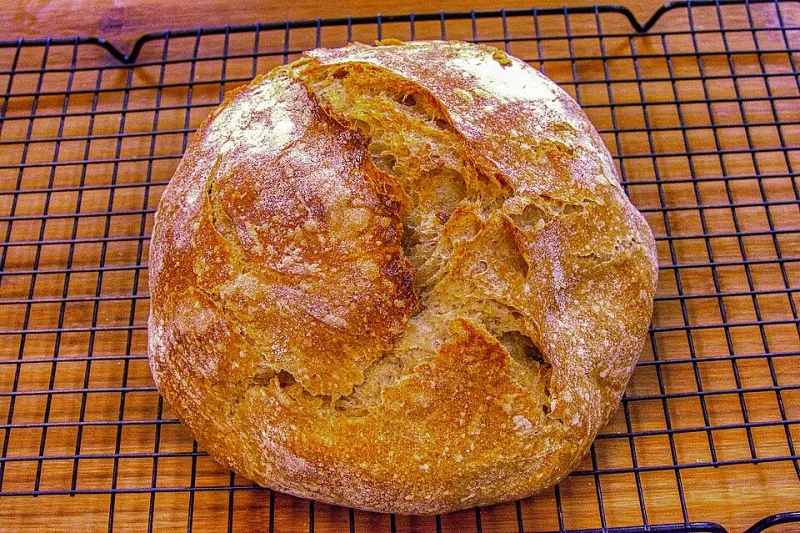
Photo: Dana Hutchinson, CC BY 3.0, via Wikimedia Commons
There's a moment — and if you've ever picked up a fresh loaf from a good bakery, you know exactly what we're talking about — when you press a sourdough boule gently between your palms and the crust practically talks back. That sharp, papery crackle isn't random. It's physics. And in Oakland, the atmosphere has a lot to say about how that conversation goes.
We spend a lot of time here at Merritt Bakery thinking about what makes our bread taste and feel the way it does. Some of it is craft. Some of it is sourcing. But a surprisingly significant piece of the puzzle is simply... the air outside.
Oakland's Microclimate Is Not Like Anywhere Else
The Bay Area is famous for its patchwork of microclimates, and Oakland sits in a particularly interesting spot. Sheltered from the most aggressive Pacific fog by the hills to the west, but still close enough to the Bay to absorb real maritime moisture, the city experiences a humidity range that swings dramatically across seasons and even across a single day.
In winter and early spring, marine layer mornings can push relative humidity above 85 percent before noon. By late summer and fall, the same city can drop below 40 percent on a hot Diablo wind day — that dry, easterly wind that rolls in off the Central Valley and turns everything crisp and electric.
For bread bakers, those swings aren't background noise. They're active variables that change the behavior of flour, water, fermentation cultures, and oven dynamics in real time.
What Humidity Actually Does to a Crust
Here's the short version of the chemistry: crust formation happens when surface moisture evaporates rapidly during baking, allowing the Maillard reaction — the browning process responsible for flavor and color — to kick in. The drier the surface, the faster that reaction moves. The more ambient moisture in the air, the more the dough resists that initial drying phase.
In practice, this means a loaf baked on a foggy January morning in Oakland is working against the atmosphere from the moment it hits the oven. The humid air slows surface moisture loss, which can extend oven spring (that final dramatic rise right after the dough hits heat) but also requires more time and higher heat to develop a fully set crust.
Flip that to a dry September afternoon, and the same dough, the same recipe, the same baker, will behave like an entirely different animal. The surface dries faster, the crust sets earlier, and if you're not careful, you can end up with a loaf that looks done on the outside while the interior is still catching up.
"I've been baking in Oakland for almost eight years," says one local sourdough baker who supplies bread to several East Bay restaurants. "And I still have weeks in October where I feel like I'm learning from scratch. The Diablo winds come through and suddenly my timing is off by fifteen minutes. The crust is setting before I want it to."
The Acoustic Angle: Why Some Loaves Crackle Louder
This is the part that genuinely delights us — and the part that turns bread baking into something that feels almost like music.
That crackling sound a fresh sourdough makes when you slice it or squeeze it? It's caused by the rapid contraction of the crust as it cools. A well-developed crust — one that's uniformly thin, fully dehydrated, and structurally taut — contracts more dramatically and produces a sharper, more resonant sound. Bakers sometimes call this "singing," and it's considered one of the clearest indicators of a properly baked loaf.
Humidity affects this directly. In drier conditions, the crust dehydrates more completely during the bake, leaving less residual moisture in the outer layers. When that crust hits cooler air after coming out of the oven, it contracts fast and loud. In humid conditions, residual moisture softens the crust slightly, dampening both the contraction and the sound.
Seasonal bakers in Oakland have learned to listen for this as a diagnostic tool. A loaf that barely crackles on a foggy morning might need an extra few minutes in the oven, or a slight adjustment to steam levels during the early bake phase.
How Local Bakers Adapt Season to Season
The bakers we've talked to over the years have developed remarkably intuitive systems for managing Oakland's atmospheric variability — systems that took years of trial and error to build.
Some keep handwritten logs tracking humidity readings against fermentation times, adjusting their bulk ferment schedules by as much as thirty to forty-five minutes depending on conditions. Others have developed a feel for the dough itself — checking extensibility and bubble structure rather than relying on a fixed clock.
"The recipe is a starting point," explains another East Bay baker who runs weekend bread workshops. "The real skill is reading the room. Literally. I check the weather before I check my starter."
Steam management inside the oven is another key lever. Most artisan bakers use steam during the first phase of baking to keep the crust pliable long enough for the loaf to expand fully before setting. On dry days, that steam dissipates faster, so bakers often extend the steam phase or increase its intensity to compensate. On humid days, they may reduce steam to avoid trapping too much moisture and ending up with a crust that's chewy rather than crackling.
The Starter Factor
It's not just the crust that responds to Oakland's atmospheric conditions — the fermentation culture itself is sensitive to humidity and temperature in ways that cascade through the entire baking process.
A sourdough starter is a living ecosystem of wild yeast and bacteria, and both are highly responsive to environmental changes. Higher humidity tends to accelerate fermentation activity (especially when it tracks with warmer temperatures), while dry conditions can slow things down. Oakland's transitional seasons — that gray, cool late spring before summer heat arrives, or the warm, dry stretch of fall — require bakers to recalibrate their starter feeding schedules and fermentation timelines almost weekly.
This is part of what makes Oakland an unexpectedly rich environment for bread science. The variability here forces bakers to develop a deeper, more responsive understanding of their craft than they might in a more climatically consistent city.
What This Means for You as a Customer
If you've ever noticed that a loaf from your favorite Oakland bakery tastes slightly different in January than it does in August — more open crumb in winter, crispier crust in fall — now you know why. That's not inconsistency. That's a baker responding to their environment in real time, making judgment calls based on years of accumulated knowledge about how this specific city's air behaves.
At Merritt Bakery, we think that's something worth celebrating. The loaf you pick up on a foggy Tuesday morning carries the fingerprint of Oakland's winter air just as much as it carries the skill of the person who shaped it. The two are inseparable.
Next time you hear your bread crackle, take a second. That sound is Oakland telling you it was involved.