Forty-Eight Hours of Doing Nothing: The Radical Patience Behind Every Merritt Loaf
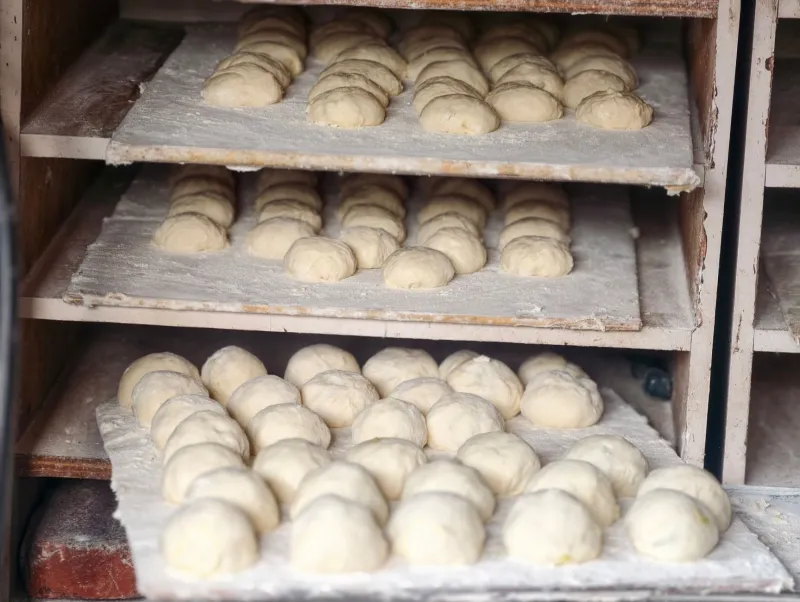
There's a moment, sometime around hour thirty, when a ball of dough sitting in a cold retarder doesn't look like much. It's not bubbling dramatically. It's not doubling before your eyes. It just sits there, cool and quiet, doing what looks suspiciously like nothing.
That, according to the bakers at Merritt Bakery, is exactly the point.
"People expect fermentation to be this visible, exciting thing," says head baker Dani Reyes, pulling a sheet pan from the walk-in and setting it gently on the prep table. "But the most important stuff is happening at a molecular level. You can't see it. You just have to trust it."
Trusting a slow, invisible process in an industry that rewards speed and volume is, it turns out, a radical act.
What Industrial Bread Is Actually Doing to Your Gut
To understand why Merritt's approach matters, it helps to understand what it's pushing back against. Commercial bread production — the kind that stocks every major grocery chain — relies heavily on a process developed in the 1960s called the Chorleywood Bread Process. It uses high-speed mixing, chemical improvers, and a dramatically compressed timeline to produce consistent, shelf-stable loaves at enormous scale.
The result? Bread that goes from raw ingredients to bagged product in roughly two to four hours.
The tradeoff is significant. Fast fermentation doesn't give wild yeast and lactic acid bacteria enough time to break down the complex carbohydrates and proteins in flour — particularly gluten and phytic acid. Phytic acid, sometimes called an antinutrient, binds to minerals like zinc, magnesium, and iron, making them harder for your body to absorb. Extended fermentation degrades it substantially. Short fermentation doesn't.
There's also the gluten question. Many people who report discomfort after eating conventional bread find they can tolerate long-fermented sourdough far more easily. Researchers believe extended fermentation pre-digests some of the gluten proteins, reducing the inflammatory load on the digestive system. It's not a cure-all, and it's not a substitute for medical guidance for people with celiac disease — but for the broader population dealing with vague bread-related bloating, the science is increasingly supportive of the slow approach.
"We get people in here all the time who say they've basically given up bread," Reyes says. "Then they try ours and something's different. That's not magic. That's biochemistry."
Hour by Hour: What's Actually Happening in the Dough
Merritt's process starts the night before bake day. After mixing, the dough undergoes a bulk fermentation at room temperature — typically between 75 and 78 degrees Fahrenheit — for anywhere from four to six hours, depending on the ambient conditions in the bakery (Oakland's famously mild climate plays a role here, keeping temperatures consistent but rarely extreme).
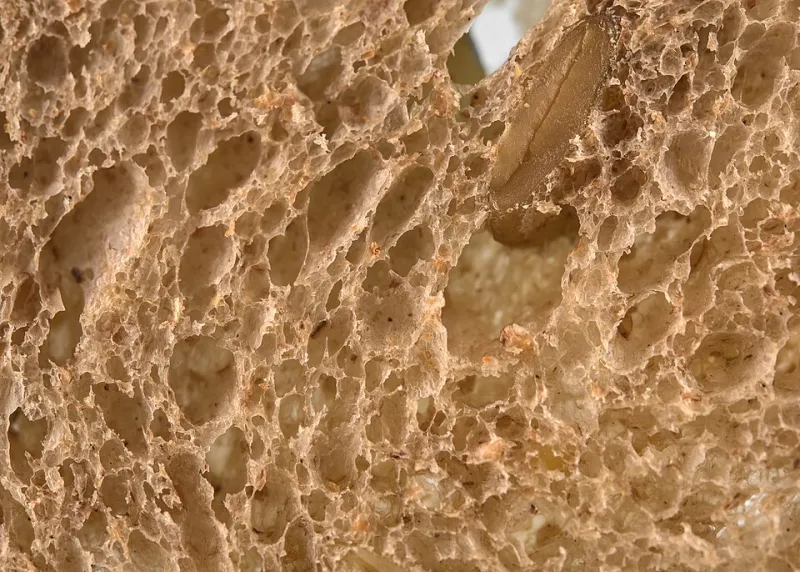
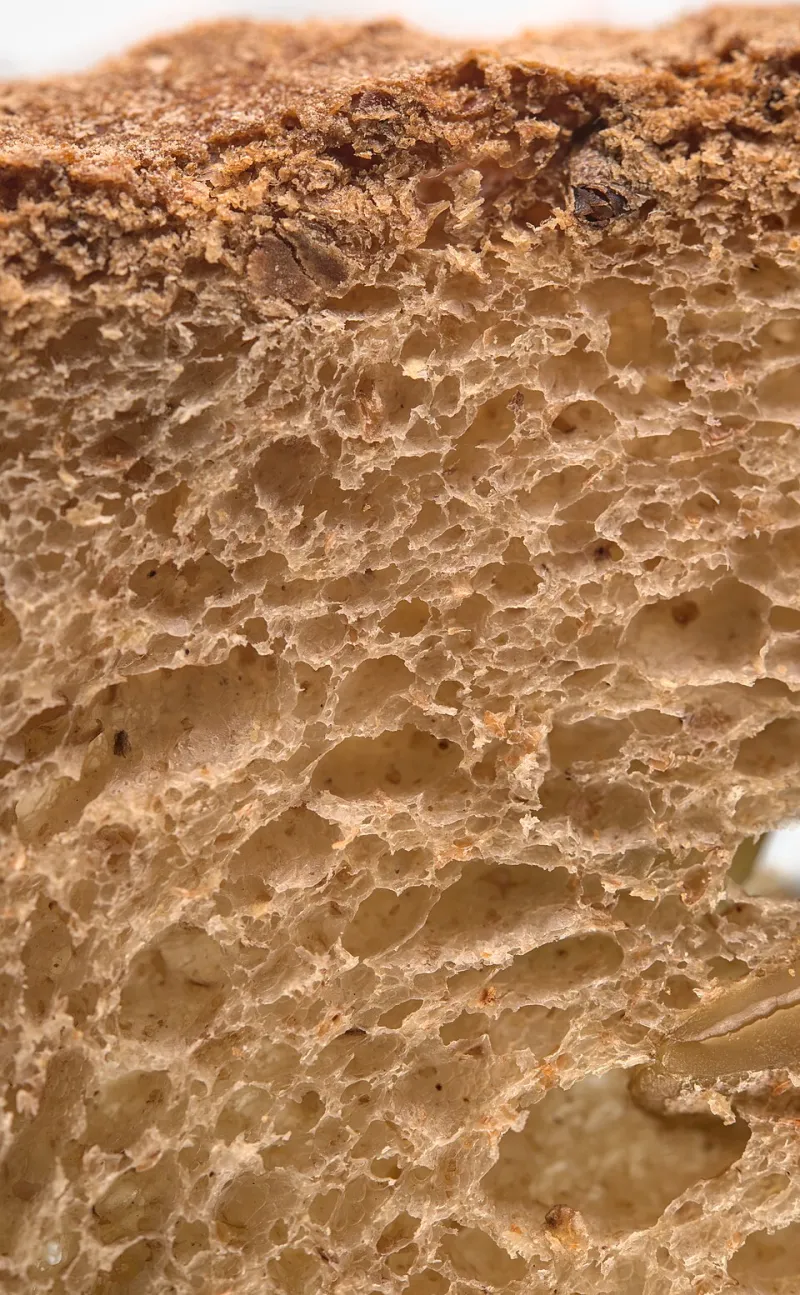
During bulk fermentation, wild yeast populations are multiplying and producing carbon dioxide, which creates the open crumb structure customers recognize in a well-made sourdough. Simultaneously, lactic acid bacteria are generating organic acids — primarily lactic and acetic acid — that contribute flavor complexity and act as natural preservatives.
The ratio of those two acids matters enormously. Lactic acid produces a softer, more yogurt-like tang. Acetic acid is sharper, more vinegary. Temperature, hydration, and time all influence which one dominates. A warmer, wetter dough tends toward lactic. A cooler, stiffer dough pushes acetic. Merritt's bakers adjust these variables deliberately depending on which loaf they're making.
After bulk, the dough is shaped and moved into the cold retarder — a walk-in cooler held at around 38 degrees — where it will sit for another twelve to eighteen hours, sometimes longer. At that temperature, yeast activity slows dramatically while bacterial activity continues at a reduced pace. This is where the flavor deepens and the gluten network relaxes into a more extensible, workable structure.
"Cold retarding is where we develop complexity without overproofing," explains Reyes. "The yeast basically goes to sleep. The bacteria keep quietly doing their thing. By morning, the dough has this incredible depth of flavor that you just cannot rush into existence."
The Discipline of Leaving It Alone
Ask any baker what the hardest part of slow fermentation is, and the answer is almost always the same: not touching it.
In a professional kitchen, the instinct to intervene is constant. Something looks underproofed — should we warm it up? Something looks like it might be going too long — should we bake it now? The discipline required to trust a forty-eight-hour process, to resist the urge to course-correct based on appearances, takes years to develop.
"I've definitely panicked and baked things too early," admits Reyes with a laugh. "You can tell immediately. The oven spring is wrong. The ear doesn't open the way it should. The crumb is tighter than it needs to be. The flavor just isn't there yet."
The bakery uses a combination of experience, temperature logs, and the poke test — pressing a floured finger into proofed dough and watching how it springs back — to make the call on when a loaf is ready. It's part science, part institutional memory, part gut feeling built over thousands of bakes.
"You develop a relationship with the dough," Reyes says. "It sounds corny, but it's real. You start to read it."
Why Oakland Customers Can Actually Taste the Difference
Merritt's regulars have developed their own fluency. On any given Saturday morning, you'll overhear conversations at the counter that would sound completely out of place in front of a bread aisle at Safeway — customers asking about the week's fermentation times, noting that this week's country loaf has a sharper tang than last week's, debating whether the open crumb on the einkorn miche is better than the previous batch.
That kind of engagement isn't accidental. It's the natural result of selling bread that's genuinely variable — that changes week to week based on temperature, humidity, the specific activity of the starter, and dozens of other factors that slow fermentation makes visible rather than smoothing over.
"Industrial bread is consistent because it's designed to eliminate all the interesting variables," Reyes says. "We're doing the opposite. We're leaning into them. That's why no two loaves are exactly the same, and honestly, that's kind of the whole point."
In a food landscape increasingly dominated by algorithmic consistency — same taste, same texture, same experience every single time — there's something quietly countercultural about bread that insists on being alive, variable, and stubbornly itself.
Forty-eight hours. A cold retarder. A starter that's been fed and tended for years. And a team of bakers willing to do the hardest thing in a fast-moving industry: wait.
The loaves come out of the oven every morning at Merritt Bakery. They're worth it.