It's Supposed to Look Bad the First Time: A Sourdough Survival Guide for Oakland Beginners
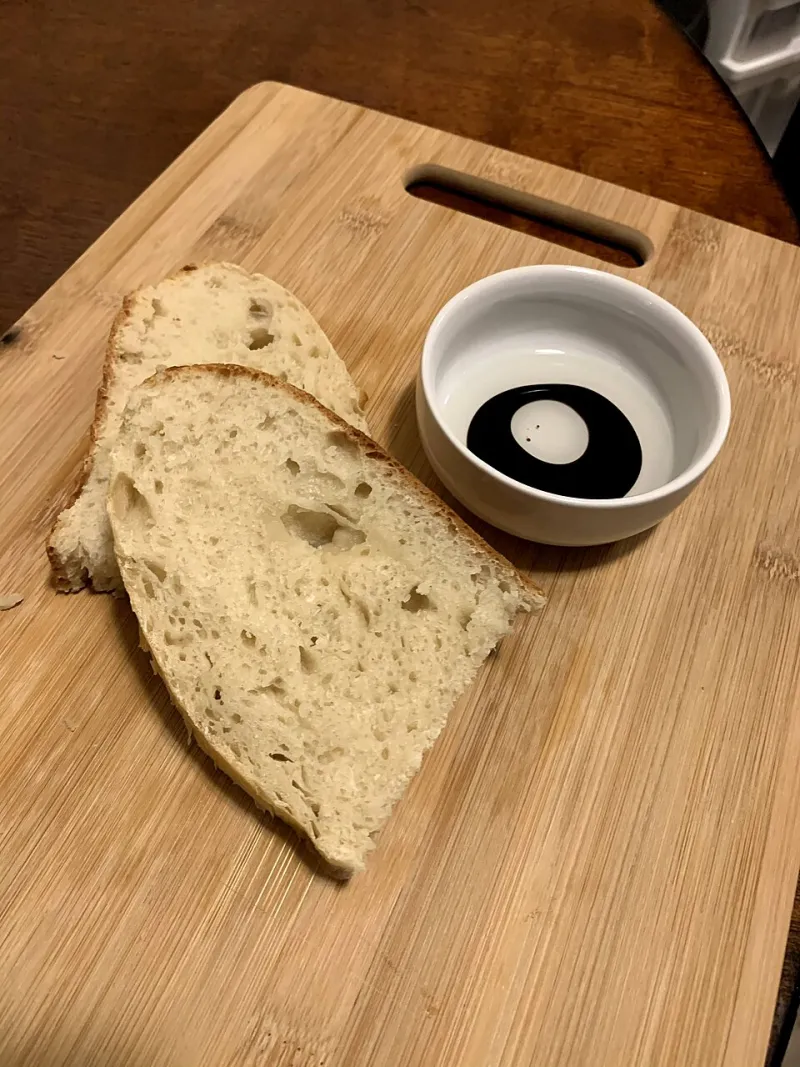
Photo: Kylakh, CC BY-SA 4.0, via Wikimedia Commons
Every week someone comes up to the counter and says the same thing: 'I've been watching sourdough videos. I think I want to try it at home.' We love this. We also know exactly what happens next, because every baker in this kitchen has lived it.
So consider this your permission slip and your field guide. Your first loaf will be ugly. That is not a bug in the process. It is the process.
Failure #1: The Brick
Dense, gummy, sad. You cut into something with the structural integrity of a doorstop. Welcome to the club — everyone's first loaf is a brick. What happened: under-fermentation, almost every time. The dough wasn't done bulk fermenting when you shaped it, because the clock on the recipe doesn't know your kitchen. Dough is ready when it's ready — jiggly, domed, puffy — not when a YouTube video says so. The brick teaches you to read dough instead of timers. That lesson is worth the doorstop.
Failure #2: The Pale Loaf
Looks fine, tastes like nothing, crust like cardboard. You under-baked it. Home ovens are timid, and most beginners pull the loaf way too early because it 'looks done.' It doesn't look done until it's dark. Push it further than feels comfortable — deep brown, not golden. Color is flavor.
Failure #3: The Flat Disc
You scored it, baked it, and it spread like a pancake. Usually over-proofing — the dough ran out of gas — or weak shaping tension. Annoying? Yes. But now you know what over-fermented dough feels like, which is knowledge you cannot get any other way.
Failure #4: The Dead Starter
You named it. You fed it. You forgot it for two weeks behind the oat milk. Here's the secret the internet won't tell you: starters are nearly immortal. That gray liquid on top? Pour it off. A spoonful of the stuff underneath, fed daily for a few days, usually comes roaring back. Stop throwing away starters and starting over. Work with what you've neglected.
Failure #5: The Comparison Spiral
The most dangerous failure isn't in the oven. It's the moment you put your lopsided loaf next to a photo and decide you're not a 'bread person.' You are. The photo took that baker ten years and forty bricks. Loaf five will be better than loaf one. Loaf fifteen will embarrass loaf five. That's the whole game.
The Oakland Beginner's Cheat Sheet
Flour: Skip the supermarket stuff. Bay Area mills and grain producers — think Community Grains and the small farms selling at Bay Area farmers markets — sell flour with actual flavor and freshness. Organic stone-milled bread flour will change your crumb before you change anything else.
Water: East Bay tap water is drinkable but chlorinated, and chlorine can slow a young starter. Fill a pitcher, leave it uncovered on the counter for a few hours, or run it through a basic charcoal filter. That's it. That's the whole trick.
Starter care, the short version: Feed equal weights starter, flour, and water once a day. Keep it somewhere around 70–75°F — on top of the fridge in winter, away from sunny windows in summer. Use it when it doubles and domes, usually 4–6 hours after feeding. If it smells like acetone, feed it. If it smells like yogurt and apples, it's happy.
Temperature: Our Bay Area kitchens run cool, which slows fermentation. In winter, your dough may need twice the recipe's time. Be patient. It's Oakland — we're used to things taking a little longer and turning out better for it.
And when loaf number one comes out of the oven looking like a crime scene? Bring it by the counter anyway. We've seen worse. We've baked worse. We'll tell you what happened and send you home with a scoop of our starter, which has been alive longer than some of our staff. Consider it a loan from the neighborhood.