Why You Keep Showing Up at the Same Time Every Saturday: The Surprising Science of Bakery Loyalty
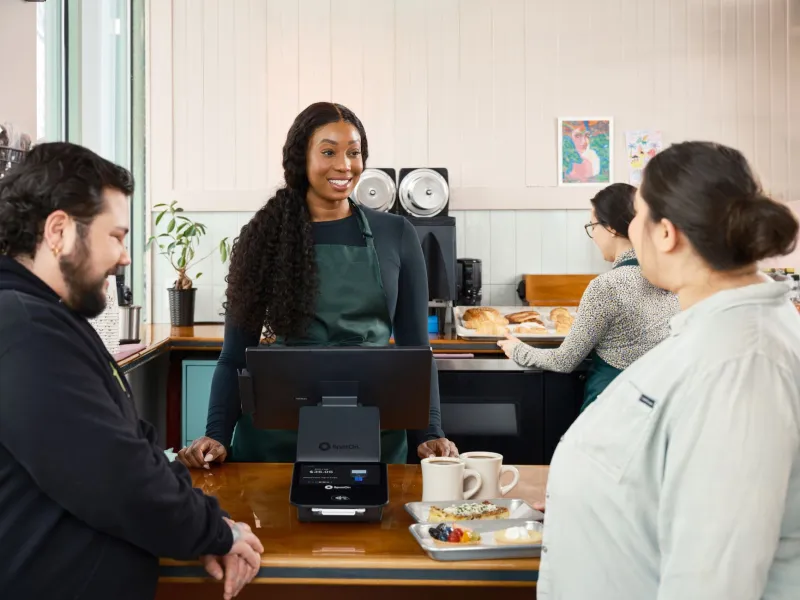
Nadia Torres couldn't tell you exactly when it started. Sometime in the spring of 2021, she began stopping at Merritt Bakery every Sunday on her way back from her walk around Lake Merritt. Same route, same time, same order — a seeded rye loaf and a single almond croissant. Now, two-plus years later, she describes skipping that ritual as something that feels genuinely wrong, like leaving the house without her keys.
"It's not just the bread," she says, standing outside on a recent foggy Oakland morning, paper bag tucked under her arm. "It's the whole thing. The smell when you walk in. Knowing Marcus is going to be behind the counter. It's like — I don't know — it resets something."
Nadia isn't unique. Ask around long enough at Merritt Bakery and you'll find dozens of people who describe their visits in almost identical language: grounding, resetting, anchoring. Words that have less to do with carbohydrates and everything to do with belonging.
The Brain on Routine
Here's what's actually happening when you walk through that door for the forty-seventh consecutive Saturday: your brain is doing something it absolutely loves. Neuroscientists call it the "habit loop" — a neurological pattern involving a cue, a routine, and a reward that, once established, becomes almost self-perpetuating. The cue might be the smell of butter hitting a hot oven that drifts onto the sidewalk. The routine is the walk in, the order, the small talk. The reward is dopamine, warmth, and a bag of something genuinely delicious.
But what makes a food ritual stick — really stick — is when the reward isn't only sensory. It's social. Researchers at the University of Chicago have found that people form the strongest habitual attachments to places where they experience both physical pleasure and a sense of being recognized. Not celebrity-recognized. Just seen. Called by name. Remembered.
That's a surprisingly rare thing in 2024. And it turns out a small bakery on the edge of a lake in East Oakland has quietly figured out how to deliver it every single morning.
Predictability as a Radical Act
We live in a world that is aggressively, exhaustingly unpredictable. Supply chains break. Menus change without warning. Your favorite coffee shop pivots to a QR code ordering system and suddenly the whole vibe is gone. Against that backdrop, a place that makes the same sourdough the same way on the same schedule starts to feel less like a bakery and more like a promise.
Merritt Bakery has never chased trends for their own sake. The laminated doughs are still laminated the same way. The starter that lives in the back is fed on a schedule that hasn't changed in years. When the almond croissant hits the case in the morning, it looks and tastes the way it always has. That consistency isn't laziness or lack of imagination — it's a form of respect for the people who've built their weeks around it.
"People need to be able to count on something," says longtime Oakland resident and Merritt regular James Okafor, who has been coming in every Tuesday and Friday for close to three years. "I lost my job during COVID. My neighborhood changed. A lot of things I counted on just... weren't there anymore. This place was still here. That matters more than people realize."
When a Bakery Becomes a Landmark
There's a concept in urban planning called a "third place" — a term coined by sociologist Ray Oldenburg to describe the social environments that exist outside of home and work where community actually forms. Bars, barbershops, coffee shops, parks. The research is pretty clear: cities with robust third places have stronger social cohesion, lower rates of isolation, and more resilient neighborhoods overall.
Merritt Bakery functions as one of Oakland's most quietly effective third places — and what makes it unusual is that the loyalty it generates isn't passive. Regulars don't just return; they recruit. They bring their parents when they visit from out of town. They recommend it to new neighbors as a form of orientation. "Go to Merritt on a Saturday morning" has become a kind of unofficial welcome-to-Oakland ritual.
That word-of-mouth loyalty is different from the algorithmic kind. It doesn't come from a well-timed Instagram post or a placement on a "best bakeries" listicle, though those things have certainly happened. It comes from people wanting to share something that has genuinely mattered to them — which is about as powerful a marketing force as exists.
The Ritual Inside the Ritual
What's especially interesting about Merritt's regulars is how specific their rituals get. It's rarely just "I come here a lot." It's "I always get the pain au chocolat but only on days when I have something hard ahead of me" or "I bring my daughter every other Saturday and she always picks the thing with the most powdered sugar."
Food researchers call this "ritualization" — the way humans layer meaning onto repeated behaviors until the behavior itself becomes a container for memory and emotion. The croissant isn't just a croissant anymore. It's the thing you had the morning you found out you got the job. It's what your kid asked for on her birthday. It's the taste of a Saturday that went exactly right.
Merritt Bakery didn't engineer any of that. But they created the conditions for it — through consistency, through quality, through showing up every single morning and doing the work the same careful way — and their customers did the rest.
What Loyalty Actually Looks Like
It would be easy to frame all of this in purely transactional terms: loyal customers spend more money, refer more people, and weather price increases with more grace. All of that is true. But reducing Merritt's regulars to a customer retention metric would miss the point entirely.
What's been built here is something closer to mutual commitment. The bakery shows up for the neighborhood — consistently, carefully, with genuine craft — and the neighborhood shows up back. On the hard weeks after a rent increase. On the Tuesday after a rough city council decision. On the mornings when Oakland feels heavy and complicated and you just need something that tastes like it was made by someone who cared.
Nadia Torres puts it simply: "Some places you go to. This place you belong to."
That's the thing about real loyalty. It doesn't feel like a transaction. It feels like home.