The Flour Beneath Your Feet: Why Oakland Bakers Are Going Hyperlocal With Their Grain
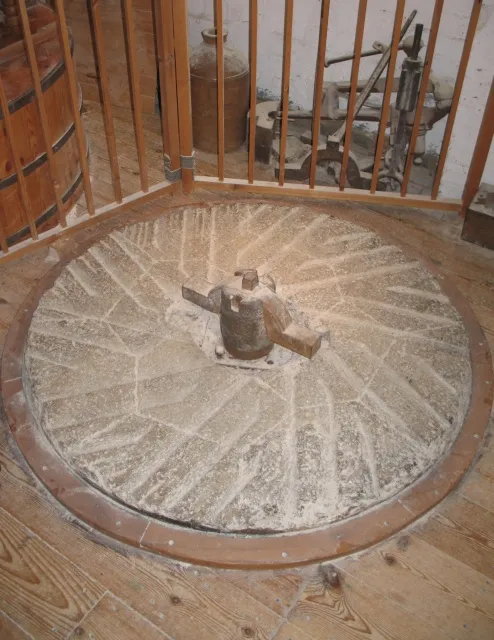
Photo: Ian Petticrew, CC BY-SA 2.0, via Wikimedia Commons
Most people walk into a bakery and think about what's coming out of the oven. The warm pull of a sourdough crust. The buttery exhale of a morning bun. What they rarely think about is what went in — specifically, the flour. For a growing number of Oakland bakers, that question has become something of an obsession.
At Merritt Bakery, we've been on a years-long journey to understand our ingredients from the ground up. And that journey has taken us straight to the source: the micro-mills and regional grain farms that are quietly reshaping what Bay Area bread can taste like.
What Even Is a Micro-Mill?
Unlike the industrial flour operations that supply most commercial bakeries — think King Arthur or Bob's Red Mill at scale — micro-mills are small, often family-run operations that stone-grind locally or regionally grown grain in limited batches. They tend to work directly with farmers, sometimes milling single-origin grains that carry the specific characteristics of their growing region.
California has a surprisingly rich grain-growing history, particularly in the Sacramento Valley and the Central Coast. Varieties like Red Fife, Sonora White Wheat, and Yecora Rojo have been making a quiet comeback, championed by farmers, millers, and bakers who believe that heritage grains deserve a place at the modern table — or at least on it, in the form of a really excellent loaf.
Operations like Grist & Toll in Pasadena, Central Milling in Utah (which supplies many Bay Area bakers), and smaller outfits like Tehachapi Grain Project have become essential partners for independent bakeries that want to know exactly where their flour is coming from.
The Taste of Place
There's a concept in wine called terroir — the idea that the specific soil, climate, and geography of a growing region leave a fingerprint on the final product. Bakers are increasingly borrowing this framework to talk about flour.
When we started experimenting with a stone-milled whole wheat from a Northern California farm, the difference was immediate and a little humbling. The flour had this warm, slightly nutty depth that our previous whole wheat just didn't. It also behaved differently — absorbing water at a different rate, fermenting with more complexity. Learning to work with it took time. But the bread it produced felt alive in a way that's hard to articulate until you've tasted it.
Other Oakland bakers have had similar experiences. A sourdough made with regionally grown and milled grain carries something extra — a sense of place that you can actually taste. It sounds a little precious when you say it out loud, but bite into a loaf made with single-origin Sonora wheat and you'll start to understand.
The Economics of Eating Local Grain
Here's the honest part of the conversation: local flour is more expensive. Sometimes significantly so. Industrial all-purpose flour can cost a baker a fraction of what a small-batch stone-milled flour runs per pound. That cost gets passed on, which is why a loaf from a bakery committed to local grain sourcing often carries a higher price tag.
But that price tag tells a story. When you buy bread made with flour from a California micro-mill, you're supporting a regional food economy that's fragile and worth protecting. You're helping keep small-scale grain farming viable in a state where agriculture is under enormous pressure. You're funding the work of millers who are essentially artisans, preserving knowledge and techniques that industrial milling largely abandoned decades ago.
For us at Merritt, this is part of what it means to be rooted in Oakland. Our city has a long, proud tradition of food justice and community economics. Choosing local flour isn't just a culinary decision — it's a values decision.
What to Ask Your Baker
You don't have to take any bakery's word for it. The best bakers will be genuinely excited to talk about their flour sources. Here are a few questions worth asking:
- Where does your flour come from? A good answer includes a specific mill or farm, not just a brand name.
- Is any of your grain stone-milled? Stone milling retains more of the bran and germ, resulting in more nutritious and flavorful flour.
- Do you use any heritage or heirloom grain varieties? This signals a baker who's thinking beyond commodity wheat.
- How does local sourcing affect your pricing? Transparency here is a good sign.
If your baker can answer these questions with enthusiasm and specificity, you've found someone worth your loyalty.
The Loaf as a Local Act
Every loaf we bake at Merritt Bakery is an argument for a different kind of food system — one that's shorter, more transparent, and more accountable to the communities it feeds. Sourcing from local and regional mills is one of the most direct ways we can make that argument in a language everyone understands: flavor.
The next time you pick up a loaf from us, take a second to think about the grain. Where it grew. Who milled it. How far it traveled to get here. Then take a bite and see if you can taste the difference.
We think you will.